Continuous Flow vs Storage Hot Water: Sizing
4 min read
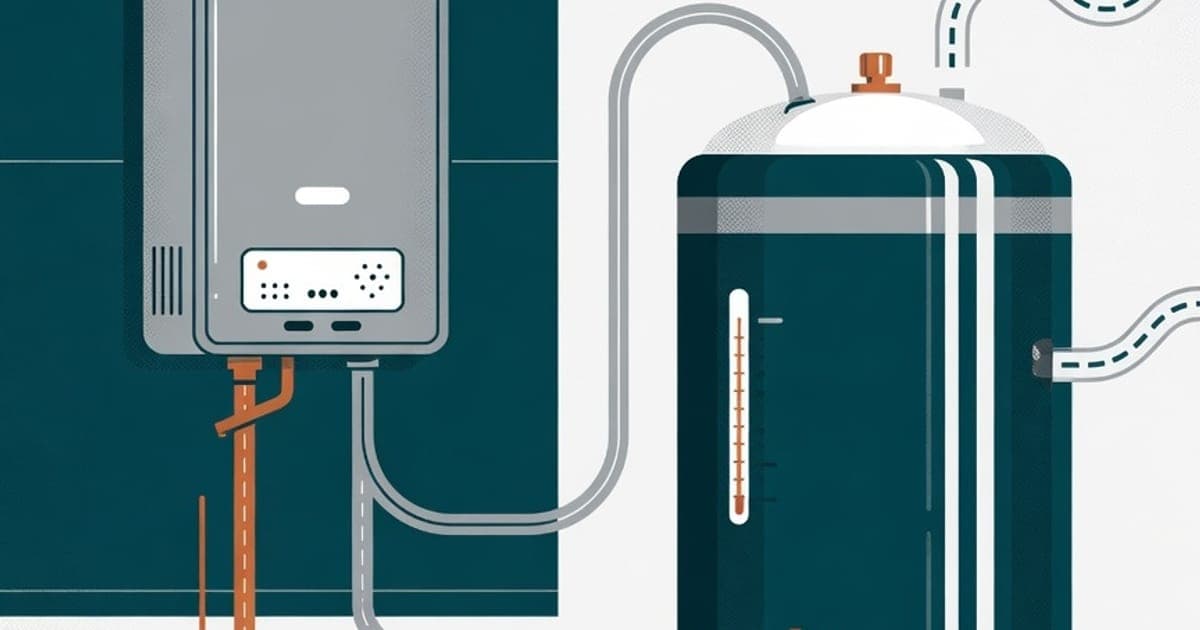
Continuous flow and storage are the two ways a home holds hot water, and they fail in opposite ways when they are sized wrong. A too small storage tank runs cold halfway through the second shower. A too small continuous flow unit never runs out but cannot supply two showers at once without both going weak and cool. Because they are sized on completely different numbers, choosing between them is really a question about your household's pattern of use. This guide explains how each is sized and which suits which home.
How the two systems differ
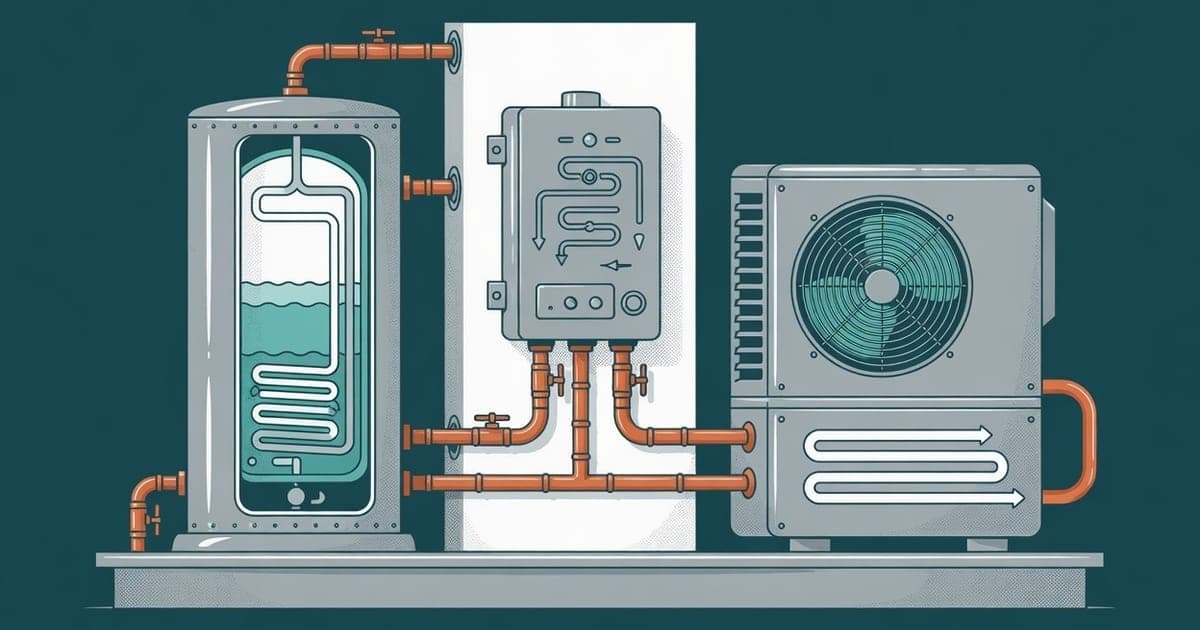
A storage system heats a tank of water and holds it ready, so it can deliver a high flow to several outlets at once, limited only by how much hot water is in the tank. Once the tank is drawn down it needs time to reheat, called recovery, and until it recovers you get cold water. You size it by volume and recovery.
A continuous flow system, also called instantaneous or tankless, heats water only as it passes through, so it never empties and never runs cold no matter how long you run one shower. Its limit is flow rate: it can only heat so many litres per minute to the set temperature, so demand beyond that rating makes the temperature or the flow drop. You size it by litres per minute.
Sizing a storage system
Storage is sized against peak daily demand, especially the busy hour. As a rough guide, a couple suits around 125 to 170 litres of electric storage, a family of four around 250 to 315 litres, and larger households or those with back to back morning showers want more. Heat pumps recover more slowly than a gas burner, so for a heat pump you generally size the tank up rather than relying on fast reheat. If your household all showers within the same short window, favour a bigger tank so the last person is not left cold.
Sizing a continuous flow unit
Continuous flow units are rated in litres per minute at a given temperature rise, commonly 16, 20, 26 or 32 litres per minute. The number you need is the total flow of the outlets likely to run at once. A single water efficient shower might draw around 8 to 10 litres per minute, so a 16 unit copes with one shower plus a tap, while two simultaneous showers plus a kitchen tap wants a 26 or larger. Temperature rise matters too: in a cold climate where the incoming water is colder, a unit delivers fewer usable litres per minute at shower temperature than its headline figure, so size up in cooler regions.
| Consideration | Storage | Continuous flow |
|---|---|---|
| Sized by | Tank volume and recovery | Flow rate in litres per minute |
| Can it run out | Yes, then recovers | No |
| Simultaneous high demand | Strong until tank drawn down | Limited by rating |
| Standing heat loss | Some from the tank | Minimal |
Which suits your home
Choose continuous flow if you have a big or unpredictable simultaneous demand only in bursts, want to avoid ever running out, and value the low standing loss because you are not keeping a tank warm all day. Choose storage if you have a large synchronised peak, want the simplest reliable supply, or are running a heat pump or solar system, which are tank based by nature and covered in our hot water system types guide.
Whichever you fit, the delivery temperature to bathrooms is capped, so the tempering rules in tempering valves and TMV compliance apply, and the hot tail is usually copper as explained in PEX vs copper pipe. If low pressure is your real complaint rather than volume, check the pressure pump sizing guide. For a bathroom project, the unit choice sits inside the bathroom renovation plumbing checklist.
Hot water replacement is licensed work, so use a qualified plumber and read how to choose a licensed plumber. To compare units, browse listings, and installers can list a business to reach local buyers. Match the system to how your household actually uses hot water and neither type will leave you cold.
Common questions
Which is cheaper to run, continuous flow or storage?
It depends more on the fuel than the format. Continuous flow has little standing heat loss because it is not keeping a tank warm all day, which helps, but a heat pump storage system usually beats both on electricity cost because of how efficiently it makes heat. Compare the fuel and efficiency, covered in our hot water system types guide, rather than assuming one format is always cheaper.
Can a continuous flow unit supply two showers at once?
Only if its flow rating is high enough. A small unit around sixteen litres per minute struggles with two simultaneous showers, while a twenty six litre per minute or larger unit copes. If your household regularly runs two showers together, size the unit up or the temperature and flow will drop for both.
Do heat pumps come as continuous flow?
No. Heat pumps and solar are tank based by nature, because they gather heat slowly and store it, so they are storage systems. If you specifically want the never runs out behaviour of continuous flow, that means a gas or, less commonly, an electric instantaneous unit, not a heat pump.
What is recovery time?
Recovery is how long a storage system takes to reheat after the tank is drawn down. A gas burner recovers quickly, an electric element more slowly, and a heat pump slowest of all, which is why heat pump tanks are sized generously. A short recovery lets a smaller tank keep up with back to back use, while a slow recovery wants more volume.